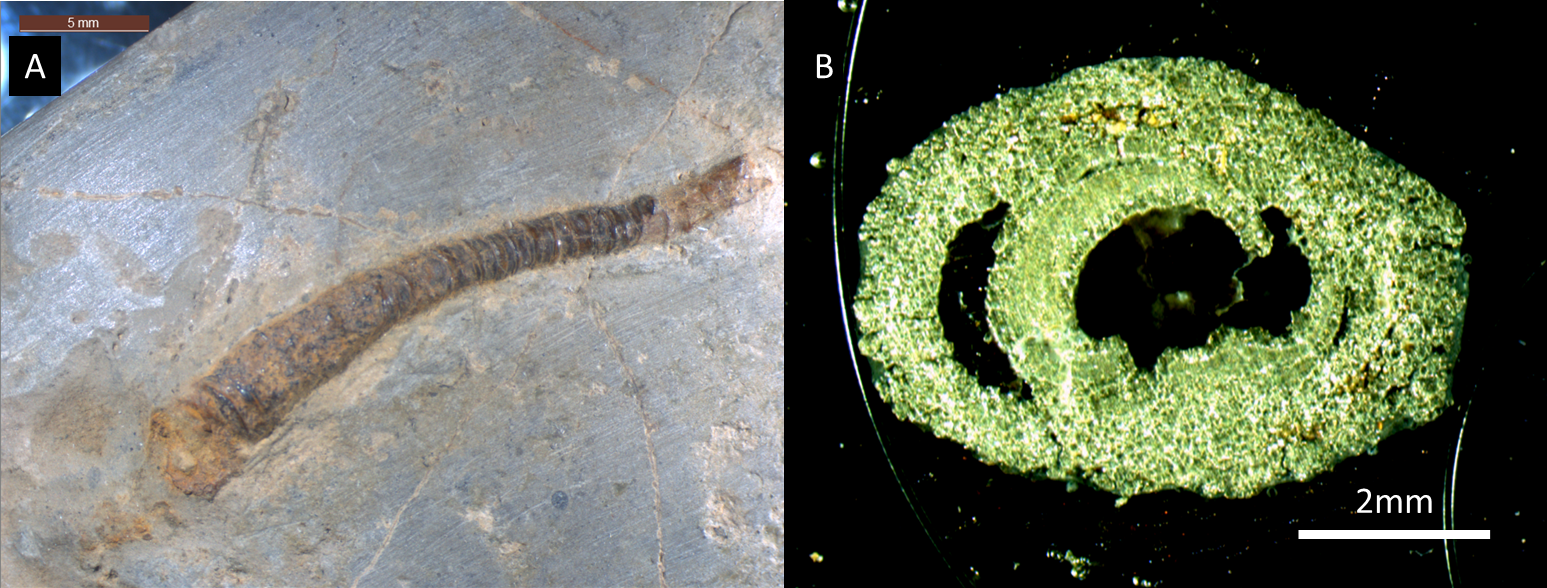
Figure 1. Taphonomic features ofConotubus hemiannulatus and cross-sectional characteristics of its pyritized fossils.
Symbiosis is a fundamental driver of evolution, shaping major transitions from the origin of life and eukaryotes to the origin and early diversification of animals. Yet, in the absence of reliable tracers, the nutritional strategies and physiological mechanisms of animal–microbe symbioses are exceedingly difficult to identify and trace in the geological record. The terminal Ediacaran Period (approximately 550–539 million years ago) witnessed not only the decline of the iconic Ediacara biota but also the ecological rise of tubular animals, which represent some of the earliest metazoans with complex body plans. Despite their distinctive morphologies and widespread distribution, how these organisms obtained nutrition has remained almost entirely unknown, limiting our understanding of their ecological roles during this pivotal interval in early animal evolution.
Some Ediacaran tubular animals broadly resemble modern siboglinid tubeworms in overall morphology. Modern siboglinids form symbiotic relationships with sulfur-oxidizing bacteria, rely on these microbial partners for nutrition, and inhabit marine environments where sulfide and oxidants coexist. This ecological analogy led us to hypothesize that some terminal Ediacaran tubular animals may likewise have employed a chemosymbiotic trophic strategy mediated by sulfur-oxidizing bacteria. The research team investigated the three-dimensionally pyritized tubular animalConotubus hemiannulatus from the Gaojiashan Lagerstätte in southern Shaanxi, China (Figure 1). Building on more than a decade of morphological and geochemical research, the team systematically analyzed molybdenum isotope compositions in the fossils and surrounding rocks, conducted both in situ and bulk multiple sulfur isotope analyses, and compared the results with those from pyritized fossils of other geological periods.
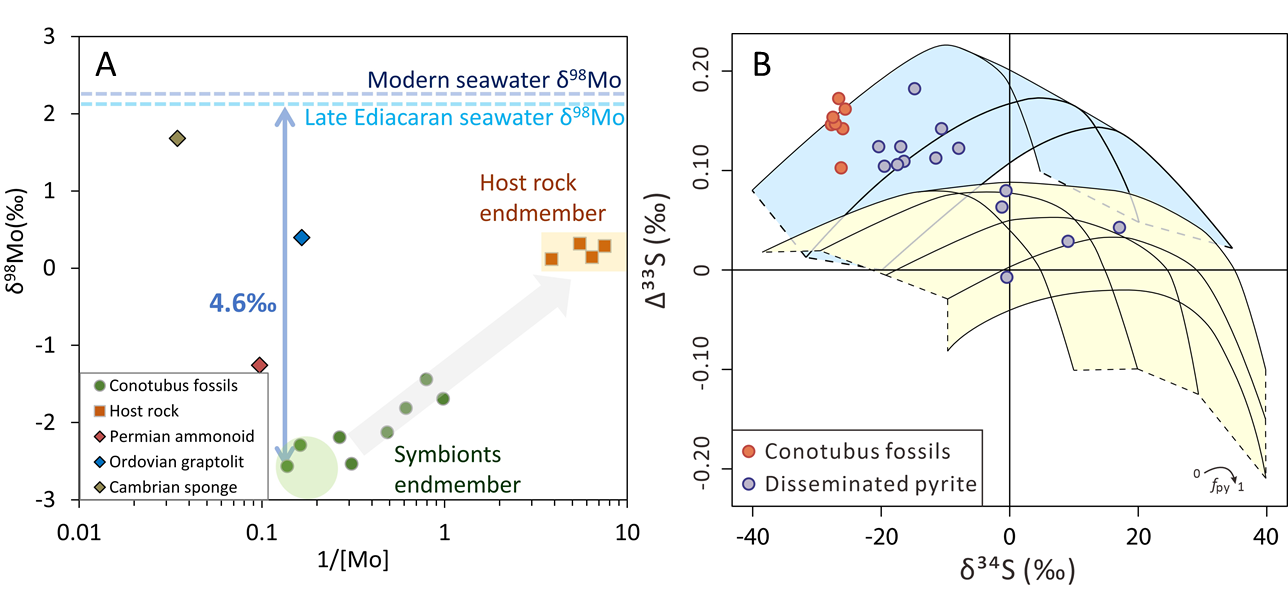
Figure 2. Molybdenum and triple sulfur isotope signatures recorded inConotubus fossils.
The results show that, among the pyritized fossils examined, onlyConotubus exhibits extremely low molybdenum isotope values (δ⁹⁸Mo as low as −2.6‰), approximately 4.6‰ lower than contemporaneous seawater (Figure 2A). This offset substantially exceeds the range produced by known abiotic processes, but closely resembles the signature of modern cold-seep tubeworms that host sulfur-oxidizing bacterial symbionts. Sulfur isotope data further indicate that the fossils underwent rapid early pyritization, a process crucial for preserving their molybdenum isotope information. The relatively high Δ³³S values of theConotubus fossils also point to active sulfide oxidation in their habitat (Figure 2B).
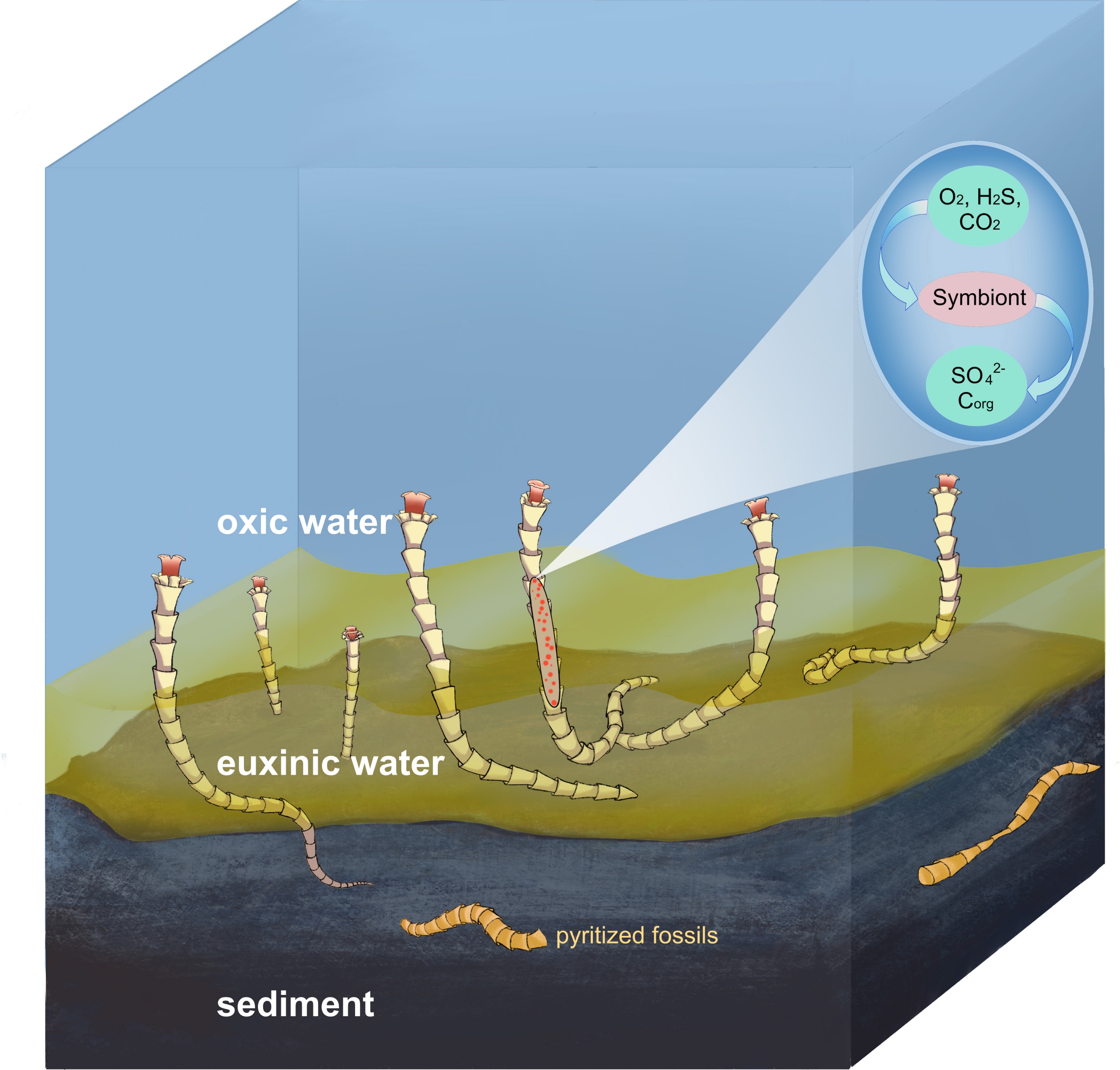
Figure 3. Ecological reconstruction ofConotubus hemiannulatus and its symbiotic relationship with sulfur-oxidizing bacteria. Illustration by Jiahao Li.
Together, the multiple isotope systems indicate thatConotubus engaged in a chemosymbiotic relationship with sulfur-oxidizing bacteria. This discovery provides the earliest geochemical evidence for animal–microbe symbiosis, extending its robust fossil record from the Phanerozoic back to the terminal Ediacaran. It may also represent an early evolutionary precedent for the diverse and complex animal–microbe symbioses found in later ecosystems.
The findings further demonstrate that animal–microbe symbiosis was not a late evolutionary innovation, but had already become an important strategy for nutrition and ecological adaptation early in animal evolution. By harnessing the metabolic capabilities of sulfur-oxidizing bacteria,Conotubus could obtain energy and increase its tolerance of toxic sulfidic conditions, thereby expanding its ecological niche and gaining a competitive advantage at marine redox interfaces near the limits of habitability (Figure 3). This perspective provides new insight into the ecological expansion and early evolution of Ediacaran animals.
The study, titled “Chemosymbiotic trophic strategy in an Ediacaran tubular animal,” was published online inProceedings of the National Academy of Sciences of the United States of America (PNAS) on August 25, 2026. Zhenfei Wang, a doctoral student at the School of Earth Sciences and Engineering and the International Center for Isotope Effects Research, Nanjing University, is the first author. Professor Yongbo Peng of Nanjing University and Professor Shuhai Xiao of Virginia Tech are the co-corresponding authors. Other contributors include Professor Qing Tang of Nanjing University; Professor James D. Schiffbauer of the University of Missouri; Professor David A. Fike of Washington University in St. Louis; Dr. Zice Jia and Professor Dong Feng of Shanghai Ocean University; Professor Peter W. Crockford of Carleton University, Canada; Professor Yaoping Cai of Northwest University; Professor Xunlai Yuan of the Nanjing Institute of Geology and Palaeontology, Chinese Academy of Sciences; and Professor Lisa M. Pratt of Indiana University.
This work was jointly supported by the Key Project of the Major Research Plan of the National Natural Science Foundation of China (92479205), the NSFC Doctoral Student Research Fund, the Young Scientists Fund (Category A), and the New Cornerstone Science Foundation.
Article information:Z. Wang, Y. Peng, Q. Tang, J. D. Schiffbauer, S. Xiao, D. A. Fike, Z. Jia, D. Feng, P. W. Crockford, Y. Cai, X. Yuan, and L. M. Pratt, “Chemosymbiotic trophic strategy in an Ediacaran tubular animal,” Proc. Natl. Acad. Sci. U.S.A. 123 (35), e2526201123 (2026).https://doi.org/10.1073/pnas.2526201123